Frequently Asked Questions (Q&A)
Q: Does this valve support bi-directional flow?
A: Yes. The floating ball design relies on upstream line pressure to push the ball against the downstream PTFE seat, creating a reliable seal in either flow direction.
Q: Can this 1-piece valve be repaired or rebuilt inline?
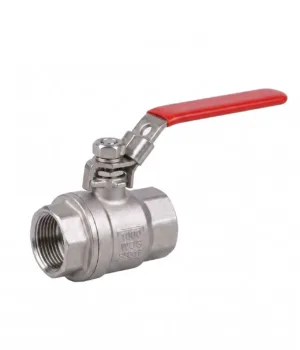
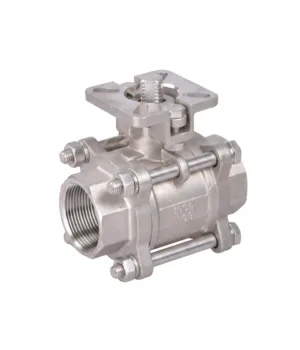
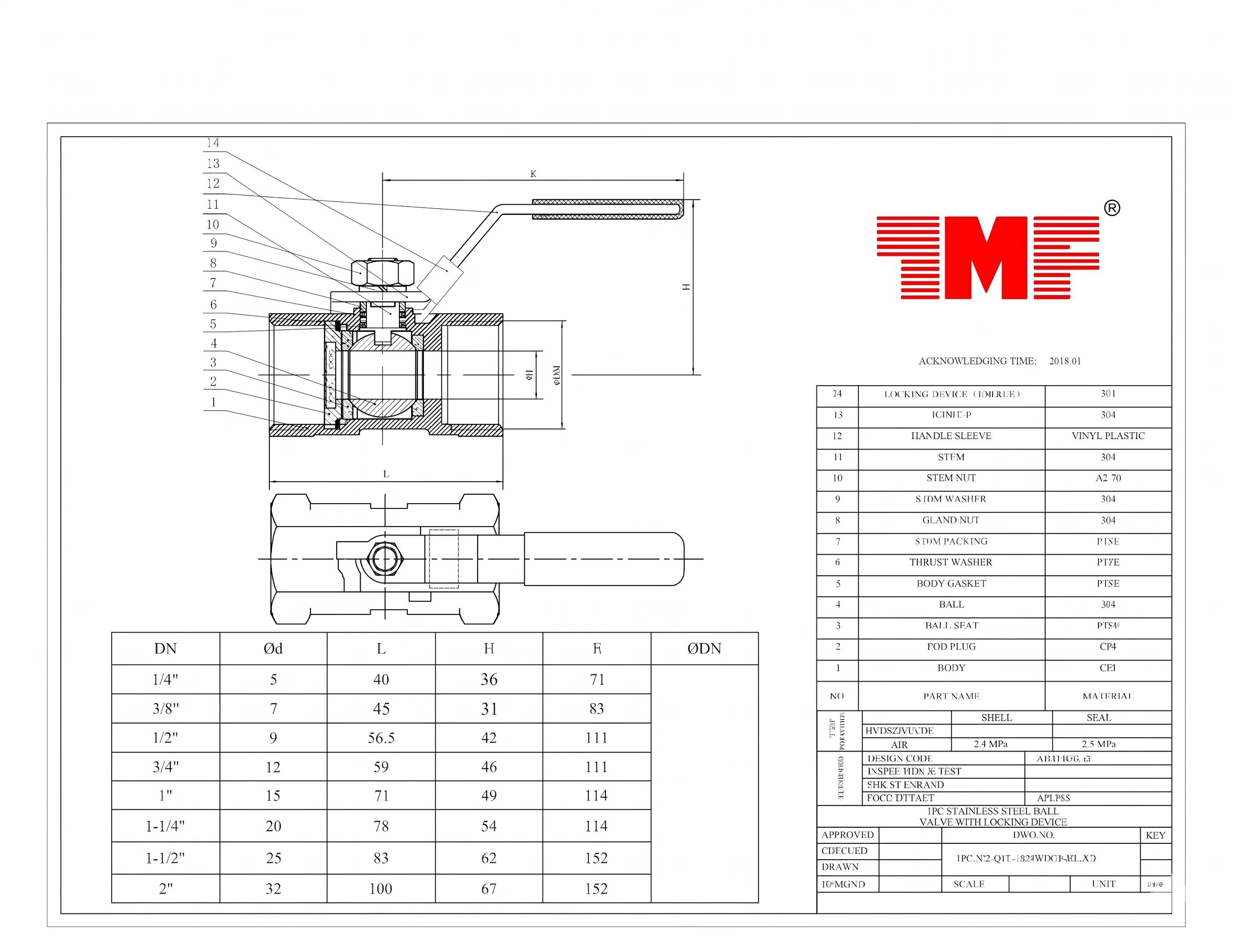
A: No. Due to the unibody construction, the internal components (the ball and inner seat) are inserted through the end port and secured by the end plug (Part 2) during manufacturing. While the stem packing (Part 7) can be tightened via the gland nut (Part 8), a full seat replacement requires removing the valve entirely from the pipeline. For inline maintainability, a 3-piece ball valve is required.
Q: What is the $C_v$ (Flow Coefficient) expectation for this reduced port design?
A: Because this is a reduced bore valve, the internal diameter ($d$) is approximately one pipe size smaller than the nominal connection size (e.g., the 2″ valve has a 32mm / 1.25″ bore). Engineers should calculate for a higher pressure drop and lower $C_v$ compared to a full-port valve. It is not suitable for lines requiring mechanical pigging.
Q: Is the stem design safe for high-pressure pneumatic applications?
A: Yes. The stem (Part 11) features a bottom-loaded, machined shoulder design. This creates a blow-out proof mechanism where internal line pressure forces the stem shoulder up against the thrust washer and valve body, physically preventing stem ejection even if the packing nut is completely removed.